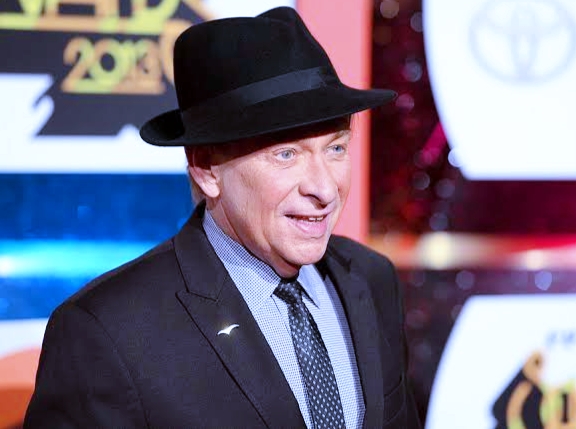
Bobby Caldwell, a vocalist musician whose hot R&B hit “How You Won’t Help Love” moved his presentation collection to twofold platinum status in 1978 and was subsequently covered by diagram clinchers like Boyz II Men and Michael Bolton, passed on Tuesday at his home in Extraordinary Knolls, N.J. He was 71.
The reason was long haul confusions of a harmful response to the anti-infection agents known as fluoroquinolones, his better half, Mary Caldwell, composed on Twitter.
Over his four-decade profession, Mr. Caldwell turned uninhibitedly among sorts, investigating R&B, reggae, delicate stone and smooth jazz, as well as guidelines from the Incomparable American Songbook. He recorded in excess of twelve collections under his own name.
While his abilities as an outdated singer — also his brand name fedora — were persuading to the point of landing him a gig as Honest Sinatra in a Las Vegas revue called “The Rodent Pack Is Back!” during the 1990s, he was most popular as a smooth voiced expert of purported blue-looked at soul.
“I was in a lift once and a person expressed profound gratitude, ‘a ton, Bobby, I just lost a bet,'” he reviewed in a 2019 meeting with Richmond magazine. “Clearly he bet truckload of cash that I was Dark, and he was off-base.”
He was likewise an exceptionally respected musician. His tunes were recorded by Chicago, Boz Scaggs, Neil Jewel and Al Jarreau, among others. “The Following Time I Fall,” which he composed with Paul Gordon, turned into a hit for Peter Cetera and Amy Award, coming to No. 1 on the Announcement Hot 100 of every 1986. In 2020, Board remembered the tune for a rundown of the 25 biggest love melodies.
Achievement, nonetheless, didn’t come for the time being.
Robert Tracker Caldwell was brought into the world on Aug. 15, 1951, in Manhattan and spent quite a bit of his childhood in Miami. His folks, Weave and Carolyn Caldwell, were performers who facilitated two early TV theatrical presentations, “42nd Road Survey” in New York and “Suppertime” in Pittsburgh, prior to moving the family to Miami.
“I was a the stage child,” he said in a new video interview. By age 17, he was composing and playing out his own material. He before long moved to Las Vegas, where he performed with a gathering called Katmandu that cut a collection in 1971. In the mid 1970s, he got a turn at the center of attention as a beat guitarist for Little Richard.
He went through the following quite a long while attempting to really establish himself, playing in bars and recording demos. He at last tracked down a sample of fame by his own doing with the outcome of “How You Won’t Help Love.” That achievement went on in the mid 1980s with collections like “Feline in the Cap” (1980) and “Continue” (1982).
While his star blurred later during the ’80s, he proceeded to record and perform for a really long time. In 2015, he scored a rebound with his collection “Cool Uncle,” which he made with the prestigious R&B maker Jack Sprinkle. The collection crossed generational lines, including the visitor craftsmen Deniece Williams, CeeLo Green and Jessie Product, and it climbed the Announcement contemporary jazz graph. Drifter referred to the collection as “2015’s most brilliant retro-soul restoration.”
Complete data on survivors was not promptly accessible.
Such a hybrid could have struck some as impossible, however not Mr. Caldwell. “This business is continually in a condition of motion,” he said in a 2005 meeting with NPR. He added that R&B radio “isn’t what it was” in his initial days, yet that rappers were spreading into what he called “grown-up metropolitan, which is a greater amount of the R&B that you and I cut our teeth on.”
“As it continually transforms,” he said, “you sort of need to continue to reevaluate yourself.”
 Site Title